

Views: 0 Author: Site Editor Publish Time: 2025-06-26 Origin: Site


As switch chips evolve, higher-performance nodes like 5nm process technology reduce power consumption per unit of computing power. However, as switch chip bandwidth scales to 51.2Tbps, single-chip power consumption rises to approximately 900W. Similarly, optical modules have seen power increases—from under 1W for 10G modules in 2007 to nearly 30W for 400G/800G modules today, with future 1.6T modules expected to push limits further. This raises critical concerns about cooling solutions for both chips and modules.
While air cooling remains prevalent, it faces challenges when chip heat flux exceeds 100W/cm²:
Thermal Resistance Bottleneck: Current air-cooled heatsinks, relying on heat pipes, vapor chambers, and 3D VC, are nearing optimization limits.
Space Constraints: Expanding heatsink size is impractical due to switch height restrictions. Fan speeds have reached 30,000 RPM, generating excessive noise.
Power Scalability: As 102.4Tbps/204.8Tbps switches emerge, air cooling struggles to meet thermal demands.
Liquid cooling is categorized into:
Single-Phase: Cooling fluid remains liquid, leveraging high specific heat capacity to absorb heat.
Two-Phase: Fluid undergoes phase change (evaporation), utilizing latent heat for superior cooling.
Single-phase is currently preferred for its simplicity, maturity, and cost-effectiveness. It includes:
Cold Plate Liquid Cooling: Liquid-cooled plates attach to hot components (e.g., chips), with coolant circulating through racks.
Immersion Cooling: Entire devices are submerged in dielectric fluid, enabling direct heat transfer.
Advantages of Cold Plate Cooling:
Minimal data center retrofitting (only racks, CDUs, and water systems need upgrades).
Lower coolant volume and broader fluid options reduce initial costs.
Mature supply chain and higher market adoption.
Advantages of Immersion Cooling:
Direct contact ensures superior heat dissipation, reducing overheating risks.
Eliminates fans, lowering vibration and extending hardware lifespan.
Higher allowable water-supply temperatures ease cooling infrastructure constraints.
At the 2022 OFC, Ruijie unveiled a 51.2T NPO cold plate-cooled switch, upgrading NPO modules from 1.6T to 3.2T in a 1RU form factor. This design significantly cuts power consumption compared to traditional air-cooled switches.
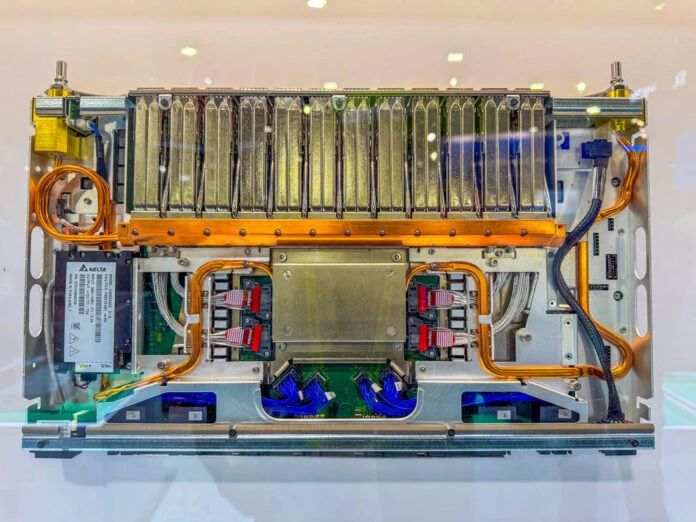
At SC24, HPE showcased the Slingshot 400, a fully liquid-cooled 51.2T switch. Its design eliminates fans, cooling both chips and 400G pluggable modules (housed in 24 front-panel cages). The liquid cooling system ensures efficient heat extraction from high-power components.
Liquid cooling is becoming essential as switch power density escalates. While cold plate solutions offer practical near-term benefits, immersion cooling provides unmatched thermal performance for future high-power systems.
To learn more about the relevant content, feel free to visit our website: www.greatminds-cn.com ,If you have any questions, please contact us at info@greatminds.com.cn

