

Views: 79 Author: Site Editor Publish Time: 2019-12-24 Origin: Site


As the weather gets colder, it is the peak season for hot springs and saunas. And it is not a small test for the equipment in the machine room. Today we will mainly introduce the plate heat exchanger in the machine room.
As the plate heat exchanger works for a long time, the surface of the heat transfer plate will produce different degrees of dirt or deposits, thereby increasing the flow resistance and reducing the heat transfer performance, these are mainly the pressure difference between the inlet and outlet pressure gauges and the reduced temperature of the cold medium outlet. So we have to clean it, we need to debug the experiment after the cleaning is completed to ensure the normal use of the plate heat exchanger, then what are the things we need to pay attention to during the debugging process?
1. Reserve a certain inspection site around the location of the plate heat exchanger.
2. Before installation, the pipeline connected to the plate heat exchanger should be cleaned to prevent sand, oil, welding slag and other debris from entering the plate heat exchanger, causing obstruction of the flow channel or damaging the plate. The plate heat exchanger has a small footprint and light weight. Except for the volume of the device itself, no additional inspection and installation space is required, and the thickness of the plate used for heat exchange is only 0.6-0.8 mm.
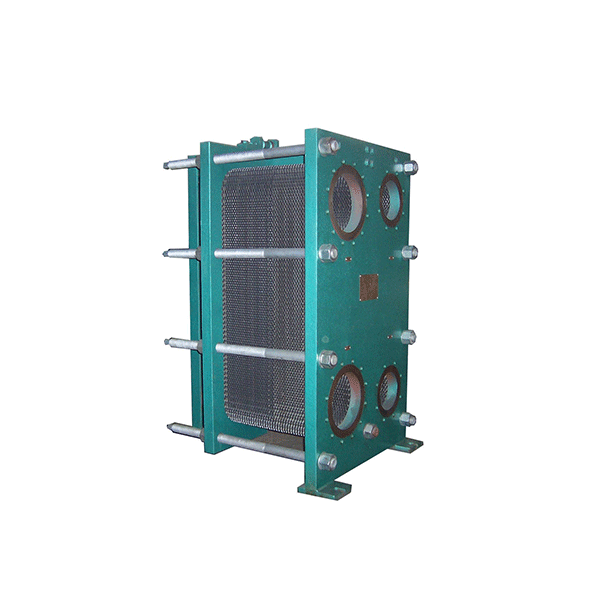
3. When the plate heat exchanger is stopped, first, close the medium solenoid valve on the high-pressure side, and then close the medium solenoid valve on the low-pressure side . As the promotion of high efficiency, environmental protection and energy saving, the advantages of plate heat exchanger in the field of heat exchange have become increasingly significant, it can be used in heating, cooling and food disinfection,etc.. It also has significant economic benefits in the field of low-grade heat energy recovery. When started up, first open the medium plunger valve on the low-pressure side, and then open the medium plunger valve on the high-pressure side slowly after the medium fills the plate heat exchanger channel.
4. Check if there are looseness in clamping bolts before putting the plate heat exchanger into use. If there is, tighten them. In recent years, plate heat exchanger have replaced traditional shell-and-tube heat exchanger in airports, hotels, commercial buildings, etc., and have achieved good results.
5. Maintenance. If there are often large particles of muddy sand or debris in the medium, the supporting decontamination equipment should be arranged in front of the plate heat exchanger. The plate heat exchanger has a low fouling coefficient, and the fluid violently rolls between the plates to form a turbulent flow. The excellent plate design avoids the existence of a dead zone, so that impurities are not easily deposited and blocked in the channel, and a good heat exchange effect is ensured.
The main reason for debugging the plate heat exchanger is that during the cleaning process, the device may not be operated smoothly if there is an accidentally touch. Therefore, in order to make better use of the equipment, we must pay attention to the process of debugging.


